
Scholarship, Grants and Other Related Applications: A Report of the Virtual Masterclass 2020
Emmanuel Durosinmi, Samuel Oyewole & Innosuccess Destiny Ogwuche
(Click below to download the report.
Virtual Masterclass Report 2020)
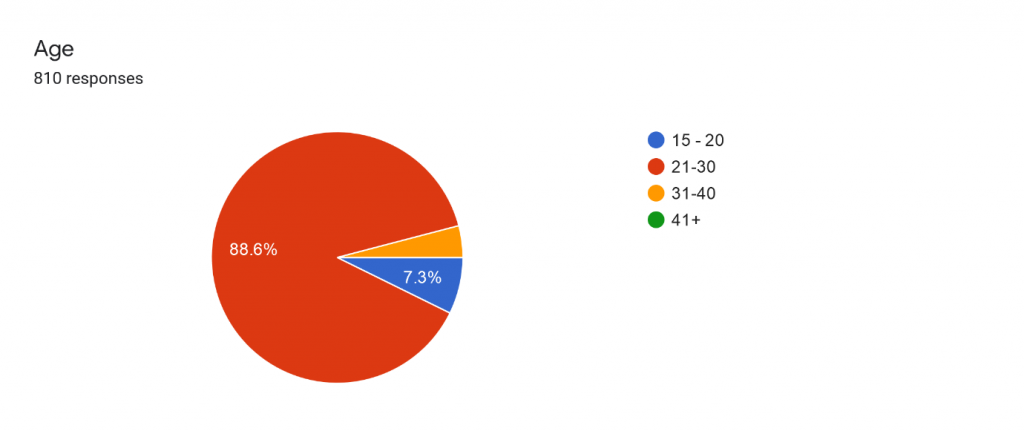
On the 15th of May 2020, Green Minds Empowerment Foundation (GMEF) organized a Virtual Learning Session on Award Winning Scholarship for Career and Professional Development. As a way of dousing the tension, frustration and confusion of students and recent graduates whose plan have been crushed by the unpopular Covid19 and its attendant consequence of lockdown and self-isolation that has reduced our communication and interaction to virtual platforms. This project was inspired to encourage students and graduates to utilize this period for their career and professional development with the hope of being among the productive and emerging scholars in post-covid19. Nigerian undergraduate students and graduates were the primary audience targeted for the programme. However, we happily received 2.2 per cent foreign participants: Ghana (0.6%), United Kingdom (0.2%), Pakistan (0.2%) India (0.1%), Denmark (0.1%), Guyana (0.1%), France (0.1%), Belgium (0.1%), and Canada (0.1%). In total, we had 810 registered participants. Figure 1&2 shows the gender and age distribution of these participants.
Figure 1
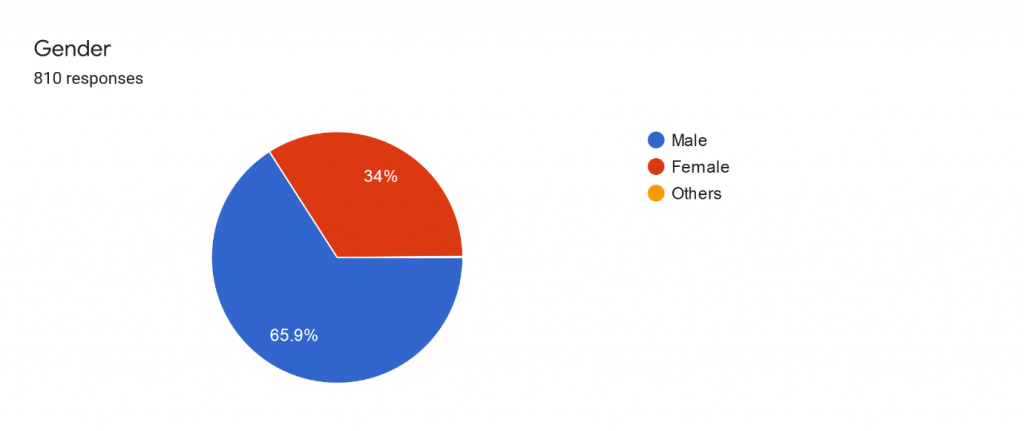
Figure 2
We adopted WhatsApp as a platform for the masterclass, for its convenience and minimum cost of data required for participants. For this purpose, we created three groups, two for Pure and Applied Sciences, and another for Art, Humanities, Management and Social Sciences, in reflection of educational background of our participants. We had a total of 521 active participants, of which 357 of them were in the two Pure and Applied Sciences. The classes were facilitated by Emmanuel Durosinmi, the founder and programmes manager of GMEF; Samuel Oyewole, a lecturer in the Department of Political Science, Federal University, Oye-Ekiti and GMEF Trustee; and Innosuccess Destiny Ogwuche, Founder and CEO Tellit. The class was moderated by Josiah Fadugba, Creative Director of Losici Enterprises (with expertise in content writing, website design and development); Yusuf Ayobami, Founder and CEO of Hypersence Limited (with expertise in software, website and mobile application development, UI/UX Design and Virtual training); and Ronke Odeloye, a baker and specialist in Human Resource Personnel.
The programme highlighted important points to be considered in scholarship, fellowship, short courses, and grant applications, based on the experiences of the facilitators. The presentations were structured to meet the need of our participants that are starters and the experienced.

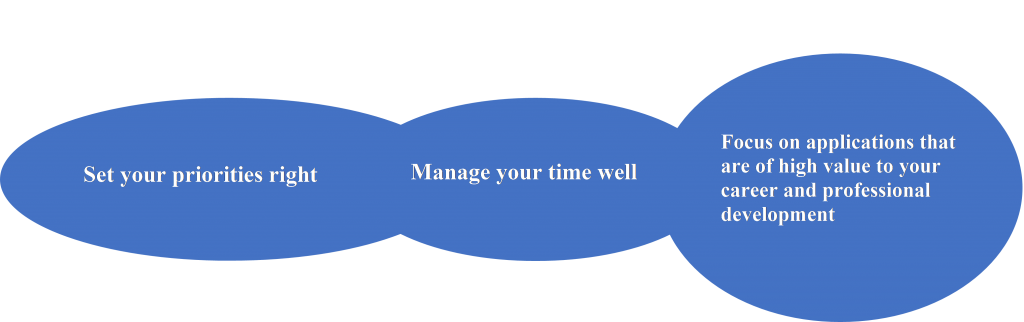
With hundreds of thousands of sources on the internet, the facilitators encouraged the participants to ‘know what they want’ by ‘setting their priorities rights’ ‘managing their time using various scheduling apps to track their applications while staying ahead of deadlines’ and ‘focus on applications which are of high value to their career and professional development.’
Desired study destination was one of the essential points given to participants. A lot of admission and scholarship applicants apply without justifying their choice of destination properly. Countries like Canada, United Kingdom, United States of America, Australia, New Zealand, Germany, France, Netherlands, Ireland, China, Japan, Thailand to mention just a few are often the desired destination for most applicants. But the question is why would you want to travel to as well as study and receive scholarship in these countries? The facilitators enlightened the participants to always reflect on these important questions when planning and making application for either admission or scholarship. Besides, how will the country boost your career and professional development? Are there prospects to build network and connections? Does your proposed university have the research expertise and the right facilities to train you? Are there prospects to stay and work at least briefly after study? We are of the view that if participants can justify these questions carefully, you are making good plans for your applications.
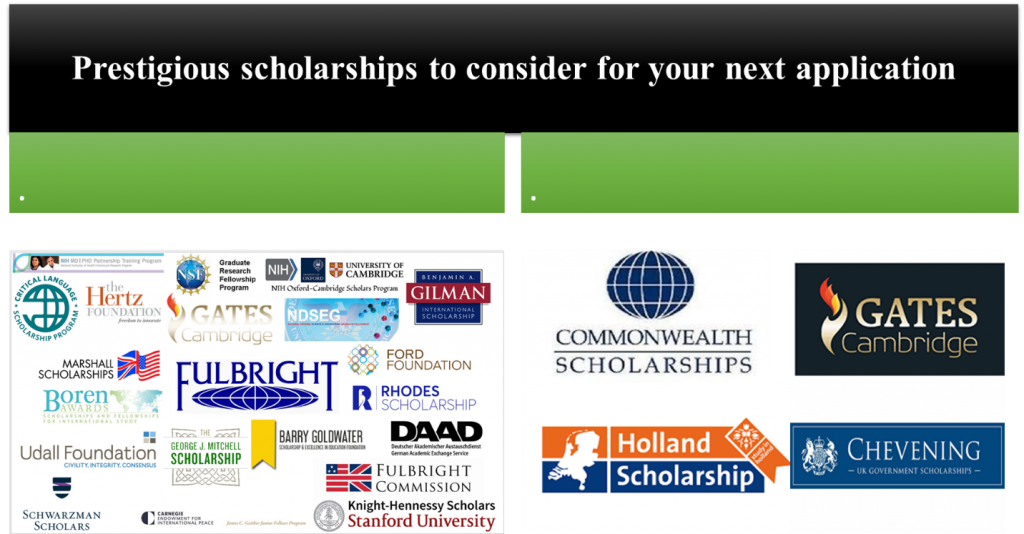
Some documents are important for all applicants seeking admission and scholarship abroad, international passport, degree certificate, university transcript, test results (IELTS, GRE, SAT, TOEFL), motivation statements and recommendation letters. Amidst these, emphasis was placed on good recommendations and well-structured motivation statements. Some applicants do not maintain good relationship with their referees but expect quality recommendations when applying for scholarship and admission. Participants were advised against this practice. The quality of recommendation depends on how well referees (lecturer, employer, and other mentors) can vouch for applicant academic prowess, work performance, leadership qualities, and capacity to complete a programme at the speculated period. The quantity of recommendations (in term of words and pages) is less important to the quality of the content. Motivation statements also need to align properly with recommendations. These can be worked out with the help of good mentors. Having one or more publications, most especially in reputable journals can equally boost one’s chances in scholarship, fellowship, grant and related applications. Some universities will require your resume and in some cases sample of your past research outputs. Hence, publication record is an additional advantage.
Acquiring good writing skills is important for applicants. For an application to attract a scholarship award, it must pass the test of content, organization, expression, mechanics, accuracy (COEMA). Participants were also advised to take fact-finding seriously before they begin application for a scholarship or admission. As an applicant, you should be well informed of the requirements for your desired scholarship and course program. It’s not advisable for applicants to jump to any application without doing a research on them. In consideration of scholarship essay and motivation, applicant must reflect research capacity, leadership qualities, academic records, the benefit of the course to career and professional development, and foreseen impact for home country. These among others will show the reviewers of the application that you deserve the admission and scholarship. Scholarship Commissions are interested in sponsoring young chaps with fresh ideas who are already engaging their communities in their own little ways, they are motivated to sponsor students and graduates that show promise of returning to home country to contribute towards its growth and development. It is important to be accurate, fact and figure-driven, simple, concise, coherent, and convincing, and not repetitive and ambiguous, in expression to win the attention of the reviewers.
In conclusion, both starters and experienced applicants need to prepare their mind ahead of unforeseen contingencies. Nobody prays for rejection, but preparation strengthen capacity to handle rejection for personal and professional development. Rejection does not mean you are not good; it’s telling you there are areas you need to improve on so you can get a better response next time. Don’t allow rejection to determine your story, determine what you want to make out of rejection. Build around yourself a wall of intellectuals for mutual motivations. A series of rejections can derail your plan if you are working outside the network of friends of like mind. Serve as a source of motivation to others, it will also help you to stay motivated. Try as much as possible to maintain your privacy, but don’t be selfish with information. What you think you know as the best may be far from the reality, so share your thoughts and take criticism as a call for improvement. In the same way, every rejection teaches you one way that does not work. The only limitation in your way is you. A determined mind love to engage challenges. If it is not challenging that means it is not meant for intellectual mind. Human progress has been built on addressing challenges from primitive societies to post-industrial age. Your background does not matter. Some of us had more rough beginning than you thought. If we among others are doing it, so you can.
Don’t give up.
(Click below to download the report.